- All
- Product Name
- Product Keyword
- Product Model
- Product Summary
- Product Description
- Multi Field Search

Views: 0 Author: Site Editor Publish Time: 2026-05-23 Origin: Site
As the international demand for eco-friendly and durable decorative materials continues to rise, WPC wall panels (Wood Plastic Composite wall panels) have become one of the most popular interior and exterior wall finishing solutions. Their waterproof performance, long service life, and modern wood-grain aesthetics make them highly attractive to global distributors, contractors, and project developers.
China is the largest production base for WPC products, offering a wide range of designs, competitive prices, and strong export capacity. However, importing from China requires careful planning and professional knowledge. Many importers encounter problems such as inconsistent quality, long delivery times, hidden logistics costs, and certification issues simply because they did not prepare adequately.
Before sourcing from China, you must clearly understand what WPC wall panels are, the types available, and how specifications affect both quality and price.
WPC is a composite of:
Wood or bamboo fibers (30–60%)
High-density polyethylene (HDPE) or polymer resin
Calcium powder and stabilizers
Additives such as flame retardants, UV inhibitors, and colorants
Different factories use different formulas, so stability and durability vary widely.
China offers multiple styles:
Standard interior flat WPC panels (common for wall cladding)
Fluted / slatted decorative WPC panels
3D embossed WPC panels
Co-extruded WPC panels (higher protection layer)
Exterior WPC cladding panels
WPC ceilings and mouldings
Each type targets different markets and price segments.
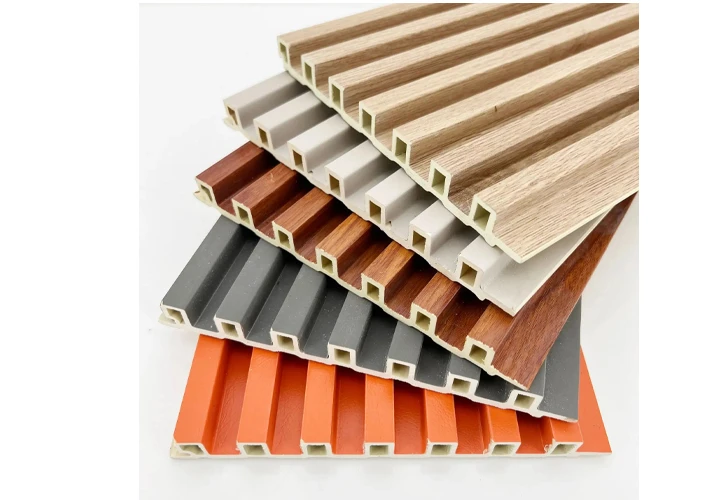
Before placing an order, always confirm:
Panel width (150–300mm common)
Thickness (8mm–25mm)
Length (2.8m, 3m, 3.2m, 4m, 5.9m)
Density level
Surface film type (PVC film / hot stamping / ASA co-extrusion)
Gloss level and texture
Color code
Fire rating (e.g., ASTM E84 / EN13501-1)
Indoor vs. outdoor application
You should also confirm raw material ratio, because lower-grade factories may reduce HDPE or use weaker recycled plastics.
Chinese factories generally supply 3 quality levels:
Grade A – best formula, stable performance, suitable for EU/US markets
Grade B – middle quality, widely used in Southeast Asia & Africa
Grade C – budget option; higher risks of deformation or fading
Choosing the correct grade avoids after-sale problems.
Selecting the right factory is the most critical step. China has hundreds of WPC producers, but quality varies drastically.
A real WPC wall panel factory should have:
Multiple extrusion production lines
Raw material mixing equipment
Lamination/film covering workshop
CNC cutting machines
Packing machines
QC laboratory
Trading companies may offer lower prices but often have inconsistent quality.
A reliable WPC supplier usually:
Has at least 5 years of export experience
Supplies 30–200 containers per month
Understands fire rating and VOC requirements of different countries
Provides references from distributors or project contractors
Factories with poor export experience often lack proper documentation.
Common export-related certifications include:
CE certification
ISO9001 & ISO14001
SGS / TÜV test reports
Fire rating (ASTM E84 / EN13501-1)
VOC / formaldehyde emission test reports
If you import into Europe, Middle East, or the United States, these certificates may be mandatory.
When dealing with long-term import projects:
Visit the factory yourself
OR hire SGS / TUV / Intertek for factory audit
This eliminates the risk of working with non-professional suppliers.
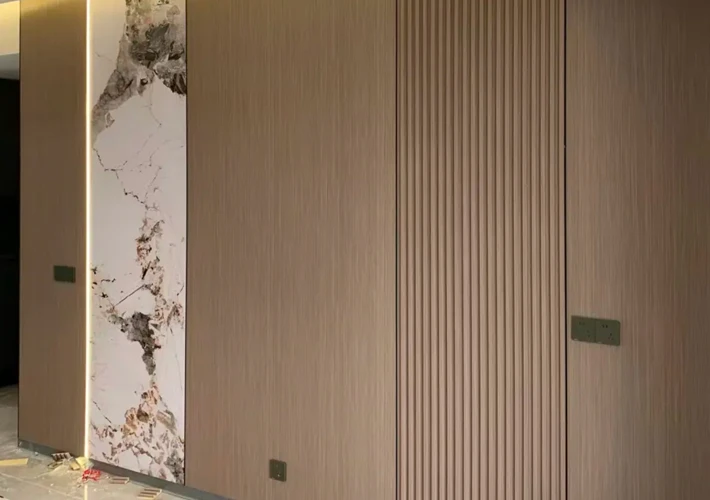
WPC wall panel quality varies widely depending on material ratio, equipment, and QC management. To prevent receiving poor-quality goods, you must implement strict quality control measures.
Request samples that represent exact mass production specifications, including:
Color
Thickness
Surface hardness
Scratch resistance
Film quality
Density
Do not approve production until samples fully match your expectations.
Check:
Panel thickness tolerance
Density uniformity
Color consistency
Surface condition (scratches, bubbles)
Packaging materials
Mid-production QC prevents large-scale defects.
Before shipment, ensure:
Correct quantity
No color difference between batches
Proper packaging strength
Accurate labeling
Moisture-proof and scratch-proof wrapping
If you work with a new supplier, final inspection is essential.
Importers often encounter:
Warping or bending
Surface film peeling
Uneven color or fading
Hollow sound caused by low material density
Poor lamination adhesion
Weak fire rating performance
These issues mostly occur with low-end suppliers or when buyers choose unrealistically low prices.
Price differences between Chinese WPC manufacturers can exceed 40%. Before comparing prices, understand what determines the cost.
Raw material quality (virgin vs. recycled HDPE)
Film type and brand
Co-extrusion or non-co-extrusion
Panel thickness and density
Fire retardant additives
Packaging requirements
Order size
The cheapest suppliers often compromise on material mix.
Standard interior WPC panels: $3.5–6.5 per piece
Slatted WPC wall panels: $12–16 per m²
Exterior cladding: $16–26 per m²
Co-extruded panels: 20–30% higher
Actual prices fluctuate depending on raw material costs.
Local customs duty
VAT / GST
Port handling fees
Inland transportation
Container inspection fees
Ship delay surcharges
Currency exchange fluctuations
Always calculate the landed cost, not only FOB price.
Low-cost WPC panels often lead to:
Shorter lifespan
Complaints from end customers
Warranty issues
Higher replacement costs
A stable supplier is more important than the lowest quote.
Logistics is a major part of WPC importation. Poor planning may lead to delays or extra costs.
Most importers choose:
FOB – Recommended
CIF – Supplier arranges shipping
DDP – Door-to-door but higher risk
Avoid EXW unless you are experienced.
WPC panels are long products. Recommended containers:
20GP: 28–30 CBM
40GP: 58–60 CBM
40HQ: 68–72 CBM (best option)
Fluted panels are typically shipped in 40HQ.
Southeast Asia: 7–12 days
Middle East: 15–22 days
Europe: 25–35 days
USA: 18–28 days
South America: 35–50 days
Your supplier must provide:
Commercial invoice
Packing list
Bill of lading
Certificate of origin (FORM E / RCEP / etc.)
HS code: 392590
Insurance document (if CIF)
Missing paperwork may cause delays.
During container loading, verify:
Panels are packed tightly
Waterproof wrapping is applied
Labels match the packing list
Cartons are not damaged
For large orders, hire a third-party inspector.
Many importers make avoidable mistakes when buying WPC wall panels from China.
Always request:
Samples
Testing reports
Videos of production
Photos alone cannot represent real product quality.
If the price is far below market average, the supplier may be:
Using recycled plastics
Cutting material ratio
Reducing panel density
Using cheap film
Offering inconsistent quality
Choose suppliers that offer stable quality and transparent production processes.
Recommended process:
Sample confirmation
Small trial order
Bulk order after quality verification
Long-term relationships give you:
Better pricing
Priority production
Free design and branding support
Stable color matching
Faster problem resolution
Reliable suppliers are always willing to provide long-term support.
Importing WPC wall panels from China can be highly profitable, but only if you manage supplier selection, product quality, logistics, and pricing wisely. By understanding specifications, verifying factory capabilities, controlling product quality, planning logistics, and avoiding common pitfalls, you can ensure a smooth and reliable import process.
We offer:
High-quality WPC wall panels
Slatted / fluted wall panels
Co-extruded panels
Exterior WPC cladding
OEM/ODM service
Fast delivery & strict QC
Competitive factory prices


